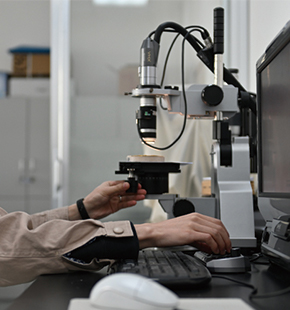
By combining non-destructive analysis methods including Scanning Electron Microscope/Energy Dispersive Spectrometer(SEM-EDS) and 3D superdepth of field microscopy with textual research,this study researches the materials and techniques used to create three Hoei Koban-Kin,a type of gold coin that first appeared in the Edo period of Japan. The research results suggest that the three gold coins are all made of gold-silver alloys that have undergone a series of manufacturing processes,including gold refining, refinement by cementing with salt,tempering,stretching,cutting,hammering,engraving,and surface coloring;and that the coins were finally stamped with a seal at the end of the process. What makes these coins unique is that there is a layer of rich goldon the surface of the coins that was related to a surface coloring technique unique in Japan. With this technique,various chemicals such as iron sulfate,sodium borate,potassium nitrate,copper sulfate,sodium chloride,and xunlu熏陆(mastic) were used to increase the gold content that was apparent on the surface of the coins so as to conceal the actual amount of gold they contained. This research deepens our understanding of the techniques used to manufacture currency during the Edo period of Japan and provides important clues for further understanding the monetary policy of the Tokugawa Shogunate in Japan
Based on a petrographic analysis of the sandstone sculptures unearthed at Jingchuan County,in combination with a regional geological survey,petrology,rock geochemistry,clastic zircon U-Pb dating,and zircon trace element data comparison,researchers have found that the primary source of materials for these sculptures comes from the medium thick-bedded greywacke of the fourth lithologic segment(Chang 2-Chang 3) from the nearby Yanchang rock formation just outside Ankou Town,Huating County.
Under the guidance of the National Cultural Heritage Administration,we made a comprehensive analysis of the stone head of the Buddha in cave 8 of Tianlongshan Grottoes,so as to make a more detailed understanding of the value of the head of the Buddha. Through high-definition image comparison, chemical composition analysis,microscopic observation,fluorescence photography and other scientific and technological means,this paper makes a systematic scientific and technological analysis of the Buddha head and the Buddha body in cave 8,and tries to restore and track the original appearance and source of the Buddha head. According to the analysis results,we believe that the head of the Buddha is the head of the stolen Buddha statue in the north of cave 8 of Tianlongshan Grottoes.